
Maximilian Krah in Northern Cyprus: High hopes & a common goal
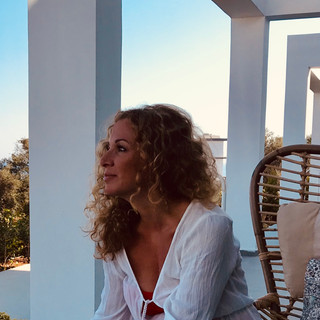
AfD member of parliament Maximilian Krah travelled to Northern Cyprus at the end of August for political and social talks. He and his hosts hope for an end to international restrictions.

If you follow our articles on the Cyprus issue, you'll know the pattern: we usually write about secretaries-general, presidents, or entire delegations. At the end of August, however, the visit came from a different direction. Maximilian Krah, a member of the AfD in the German Bundestag, traveled to Northern Cyprus at the invitation of the Cumhuriyet Meclisi, the Assembly of the Republic, for a working trip lasting several days. His publicly documented appointments began on August 25 and extended until at least August 28, 2026.
For the Northern Cypriot side, this visit held special significance that is easily underestimated from the outside. International encounters of this kind are rare – the Turkish Republic of Northern Cyprus is recognized as a state only by Turkey.
Therefore, every foreign parliamentarian who deals with politics, economics and society on the ground is seen as an opportunity to make their own perspective known beyond the island.
Krah himself emphasized before his trip that the visit did not signify recognition of Northern Cyprus by Germany. He wanted to gather information on the ground, engage in parliamentary dialogue, and raise awareness of the situation of Turkish Cypriots in Germany and Europe ( Cyprus Mail ).
Who Krah met
A key companion of Krah was UBP MP Hasan Taçoy, who represents Northern Cyprus in the Parliamentary Assembly of the Council of Europe. Taçoy was present at numerous meetings and had helped prepare the trip ( Cyprus Mail ).
Krah first met with Parliament Speaker Ziya Öztürkler. The discussion focused primarily on the political isolation of the Turkish Cypriot community, the lack of direct contact, and restrictions on travel and international sporting events. Öztürkler expressed her hope that the visit would bring these issues more attention in Germany and Europe ( North Cyprus Information Office ).
Prime Minister Ünal Üstel also received the German member of parliament. Üstel presented the North Cypriot perspective on the decades-long Cyprus conflict and advocated for the Turkish Cypriots to be recognized as an independent political partner ( North Cyprus Information Office ).
Foreign Minister Tahsin Ertuğruloğlu explained the government's position to Krah: sovereign equality of both sides and a solution based on the existence of two states. The discussion also touched on the Real Estate Commission, which is handling claims from former Greek Cypriot owners in the north. Ertuğruloğlu also spoke about arrests related to real estate transactions and their impact on the North Cypriot economy ( North Cyprus Ministry of Foreign Affairs ).
Important for context: Krah also held talks with the opposition Republican Turkish Party (CTP ) . This means the trip wasn't limited to representatives of the ruling UBP and the two-state solution – the CTP traditionally favors a federal solution to the Cyprus problem. Therefore, focusing solely on the government meetings doesn't provide a complete picture of this trip.
Other participants in the discussions included the then Minister of Transport, Erhan Arıklı, the Turkish Cypriot Chamber of Industry ( Haber Kıbrıs ), and the Association of Construction Contractors ( KTIMB ). The discussions focused on economic restrictions, the lack of direct trade opportunities, the real estate sector, and how Northern Cypriot companies could establish better connections with Europe. Krah stated that he intended to raise these issues with his party and in the Bundestag upon his return.
On August 28, he visited the Association of Turkish Cypriot Municipalities. Among those attending the meeting were the association's president and mayor of Güzelyurt, Mahmut Özçınar, as well as other mayors ( North Cyprus Information Office ).
The idea of establishing partnerships between North Cypriot and German municipalities arose during the conversation – a thought that has particularly stuck in our minds because such municipal connections can actually emerge independently of major political processes.
The program also included a visit to the Turkish Cypriot Football Federation. President Hasan Sertoğlu briefed Krah on the international isolation of Northern Cypriot football ( KTFF ). At the end of the visit, the member of parliament received a Northern Cypriot national team jersey bearing his name.
What the hosts hope to gain from this visit
Three expectations in particular are repeated in the statements of the hosts, and it is worthwhile to look at them individually.
The first is greater visibility. Representatives of Northern Cyprus want European politicians to visit the island, speak with both sides, and contribute their impressions to the public debate. Even a direct visit is seen as a step out of political isolation.
The second hope concerns practical relationships: contacts between business associations, municipalities, universities, clubs, or cultural institutions. Such connections would not constitute diplomatic recognition, but they could enable new encounters and collaborations for the people in the north – precisely the kind of everyday connection that, in our articles on the Cyprus question, has repeatedly presented to us as the truly viable element of rapprochement.
The third and greatest expectation is political in nature: a relaxation of the isolation, even leading to international recognition of Northern Cyprus. Krah expressed understanding for the demand for direct contact and described the difficulties faced by Turkish Cypriots as unacceptable. He said the people and their institutions deserved recognition. At the same time, he clarified that his trip itself did not constitute official recognition.
What of this can actually become reality
A sober assessment is worthwhile here, because there is often a great distance between what a visit can trigger and what it actually changes.
Realistically, Krah will raise the issue within the AfD parliamentary group, in the Bundestag, and in his political circles. He is a full member of the Bundestag's Committee on European Union Affairs and a substitute member of the Committee on Human Rights and Humanitarian Aid ( German Bundestag ). He can ask questions, support parliamentary initiatives, and invite interlocutors to Berlin.
Further trips by individual members of parliament or informal parliamentary contacts are also possible. Municipal partnerships, events, business forums, and encounters in the sports or cultural sectors could also develop from such discussions. However, these must be structured legally and politically in such a way that they are not perceived as official state recognition.
Direct trade or air links are considerably more difficult to establish. The approval of a member of parliament, and even a resolution from their parliamentary group, is insufficient – such steps affect German law, EU regulations, international aviation agreements, and relations with the Republic of Cyprus, and would require decisions from the German government, European institutions, or international organizations.
German recognition of Northern Cyprus is highly unlikely in the foreseeable future. The United Nations Security Council, in its resolutions 541 of 1983 ( UN Document Archive ) and 550 of 1984 ( UN Document Archive ), called upon the international community not to recognize the Turkish Republic of Northern Cyprus, which was declared in 1983. The European Union continues to support a bizonal, bi-communal federation with political equality ( European Council ). Krah's sympathy for the Northern Cypriot position does not alter this stance or German foreign policy.
Furthermore, there is a point that should not be overlooked amidst all the attention surrounding the visit: Krah belongs to the AfD. While it is the largest opposition party in the Bundestag, it does not form the federal government. His trip was neither a delegation trip of the Bundestag nor a visit on behalf of the Foreign Office. His statements therefore represent the position of a member of parliament, not the position of Germany.
A political signal, but not yet a breakthrough.
The visit could still have consequences. International isolation often begins to crumble where people start talking to each other again, and Krah has given representatives of Northern Cyprus a platform and listened to their concerns. For his hosts, that in itself is a success.
Whether this leads to more will be shown by concrete steps: Will other members of parliament travel to the island? Will the municipal partnerships envisioned in Güzelyurt actually materialize? Will business representatives or sports associations find new partners in Germany? And will the topic be discussed publicly in the Bundestag beyond this single trip?
The realistic value of this trip, for now, lies in these contacts and in bringing more attention to an island that rarely receives international attention. Krah alone cannot bring about recognition of Northern Cyprus or a fundamental change in European Cyprus policy – we have tried to make this as clear as possible above. His visit has opened a door for talks. How far it opens depends on many other political actors, and ultimately on whether both sides of the island can find a viable path for their shared future. We will continue to monitor whether anything concrete actually comes of the ideas initiated in Güzelyurt and among the business associations.
We wish MP Maximilian Krah and the North Cypriot political community every success and courageous solutions to forge a strong connection from this initial meeting. Anything is possible.
All love
Samira & Marten
Sources
Cyprus Mail: Report on Krah's meeting with Parliament Speaker Ziya Öztürkler and Hasan Taçoy
Information Office of Northern Cyprus: Meeting with Parliament Speaker Ziya Öztürkler
Information Office of Northern Cyprus: Meeting with Prime Minister Ünal Üstel
Ministry of Foreign Affairs of Northern Cyprus: Meeting with Foreign Minister Tahsin Ertuğruloğlu
Turkish Ajansı Kıbrıs: Visit to the opposition CTP
Haber Kıbrıs: Visit to the Turkish-Cypriot Chamber of Industry
Association of Construction Contractors: Discussion about the construction industry and international contacts
Information Office of Northern Cyprus: Visit to the Association of Turkish Cypriot Communities
Turkish Cypriot Football Association: Krah's visit to the association
German Bundestag: Biography and committee memberships of Maximilian Krahs
European Council: Position on bizonal, bi-municipal federation
United Nations: Resolution 541 from 1983
United Nations: Resolution 550 from 1984


Comments